

UX Design & Digital Booking Experience
Project: The Lighthouse
The Lighthouse is a luxury boutique seaside hotel offering an immersive travel experience rooted in local culture, wellness, and curated day adventures.
The brief was to design an end-to-end digital booking experience that made it easy for prospective guests to understand the value of the stay, trust the offering, and confidently complete a booking.
From a UX and digital marketing perspective, the goal was clear: prioritise user needs at every stage of the journey and remove friction between inspiration and conversion.
The digital experience needed to mirror the feeling of the stay itself: calm, intentional, and considered. Every design decision focused on guiding attention, shaping expectation, and building confidence through clarity, ensuring guests could move naturally from curiosity to commitment without feeling rushed or overwhelmed.

Why This Project Mattered to Me
What I loved about this project was designing for a highly niche luxury audience where experience, emotion, and attention to detail genuinely matter. It gave me the space to combine UX, storytelling, and digital sensibility to create a journey that felt calm, intentional, and quietly reassuring, shaping how guests perceive care, quality, and trust long before they actually arrive.
This was a true end-to-end project, from research and user insight to testing, iteration, and delivery. Blending UX design with digital marketing thinking meant every decision supported clarity, trust, and intent, turning experience design into a meaningful driver of engagement and conversion.
-
Designing a luxury travel booking experience means balancing aspiration with clarity. Potential guests need to feel inspired, reassured, and confident, while also being given all the practical information required to plan and commit to a stay. The challenge was to translate a highly emotive, experience-led offering into a digital journey that felt elegant, intuitive, and trustworthy, without overwhelming users or slowing down decision-making.
From a digital marketing perspective, the experience needed to support discovery, build credibility, and guide users naturally from exploration to booking. This meant reducing friction at key moments, prioritising content that mattered most to this niche audience, and designing a path to conversion that felt calm, considered, and aligned with the expectations of luxury travellers.
-
I led the end-to-end digital experience, combining UX design with a digital marketing mindset. My role spanned research, persona development, user journeys, wireframes, UI design, testing, and iteration, while also shaping content strategy, storytelling, and conversion paths to support confident booking decisions. The focus throughout was on aligning user needs, brand experience, and commercial intent within a refined luxury travel context.
-
I managed the project end to end, balancing discovery, design, iteration, and delivery within clear timelines. This included planning research and testing phases, coordinating feedback loops, prioritising design decisions, and ensuring progress stayed aligned with both user needs and commercial goals.
Working with a digital-first mindset meant making informed trade-offs, keeping scope focused, and moving confidently from insight to execution. The result was a well-paced project where UX, content, and conversion considerations evolved together rather than in isolation.

UX & Digital Marketing in Luxury Travel
From a UX and digital marketing perspective, The Lighthouse was about designing for a highly niche, high-consideration audience at the luxury end of the travel market. These guests aren’t browsing casually, they’re planning deliberately, investing time, emotion, and budget into a stay that needs to feel special before they arrive. The experience had to communicate refinement, trust, and authenticity, while quietly guiding users towards a confident booking decision.
Key UX & Digital Marketing Principles
Experience-first design: showcasing atmosphere, wellness, and curated experiences without overwhelming the user
Trust through clarity: providing high-quality content, logistics, and reassurance at moments that matter
Gentle conversion: guiding users naturally from inspiration to booking without pressure or disruption
The UX design focused on experience-led storytelling paired with practical clarity. Every touchpoint was designed to make guests feel informed, reassured, and cared for, from how experiences were introduced to how booking decisions were supported. Digital marketing principles shaped how content was prioritised, how value was framed, and how friction was removed, ensuring the journey felt calm, considered, and aligned with the expectations of a luxury traveller.
-
The UX strategy focused on creating a calm, intuitive journey from discovery to booking by:
Prioritising content that supports decision-making
Structuring information to reduce cognitive load
Designing familiar, trustworthy booking patterns
Aligning UX decisions with digital marketing goals such as conversion and engagement
The project included competitive analysis, user personas, user flows, wireframing, UI design, heuristics evaluation, and user testing.
-
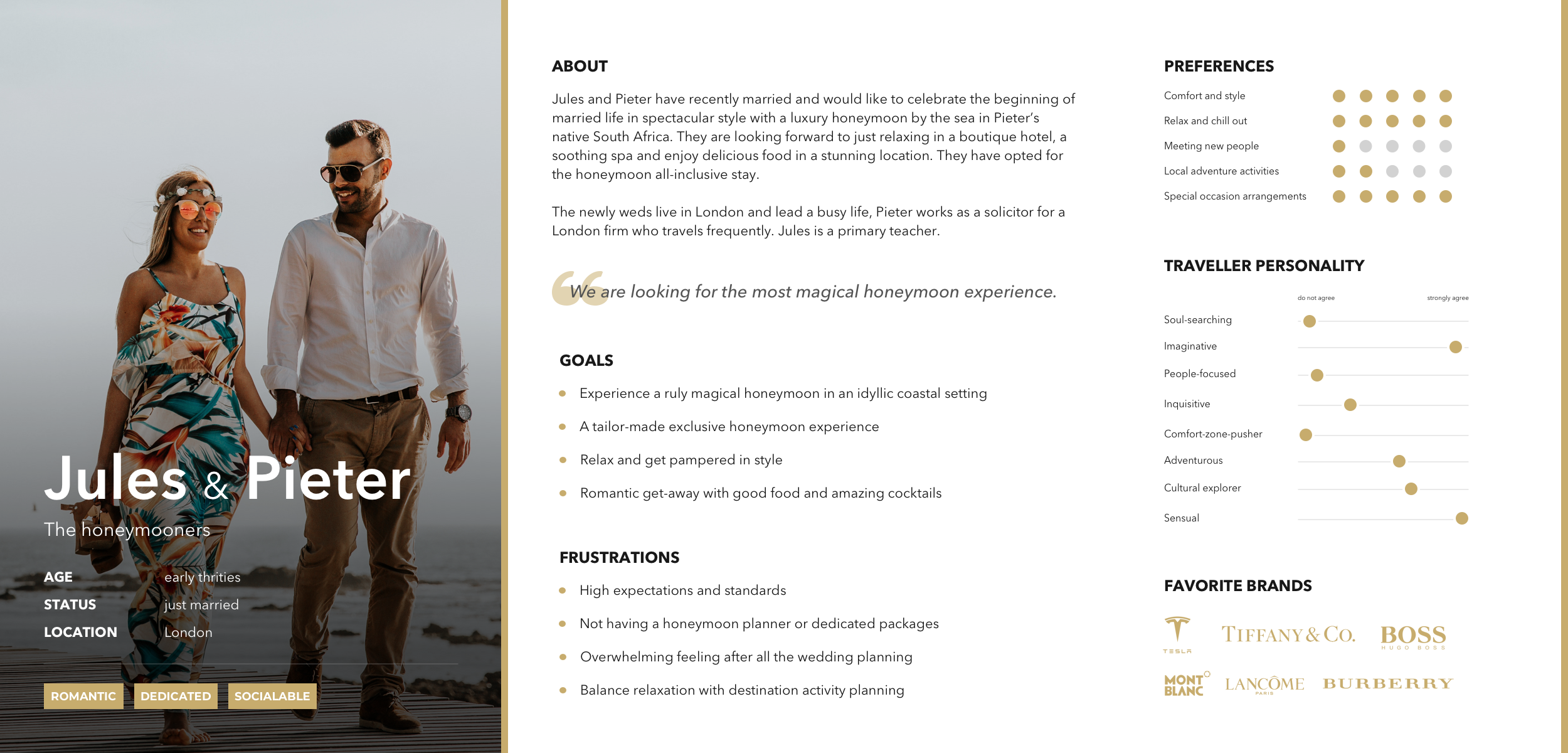
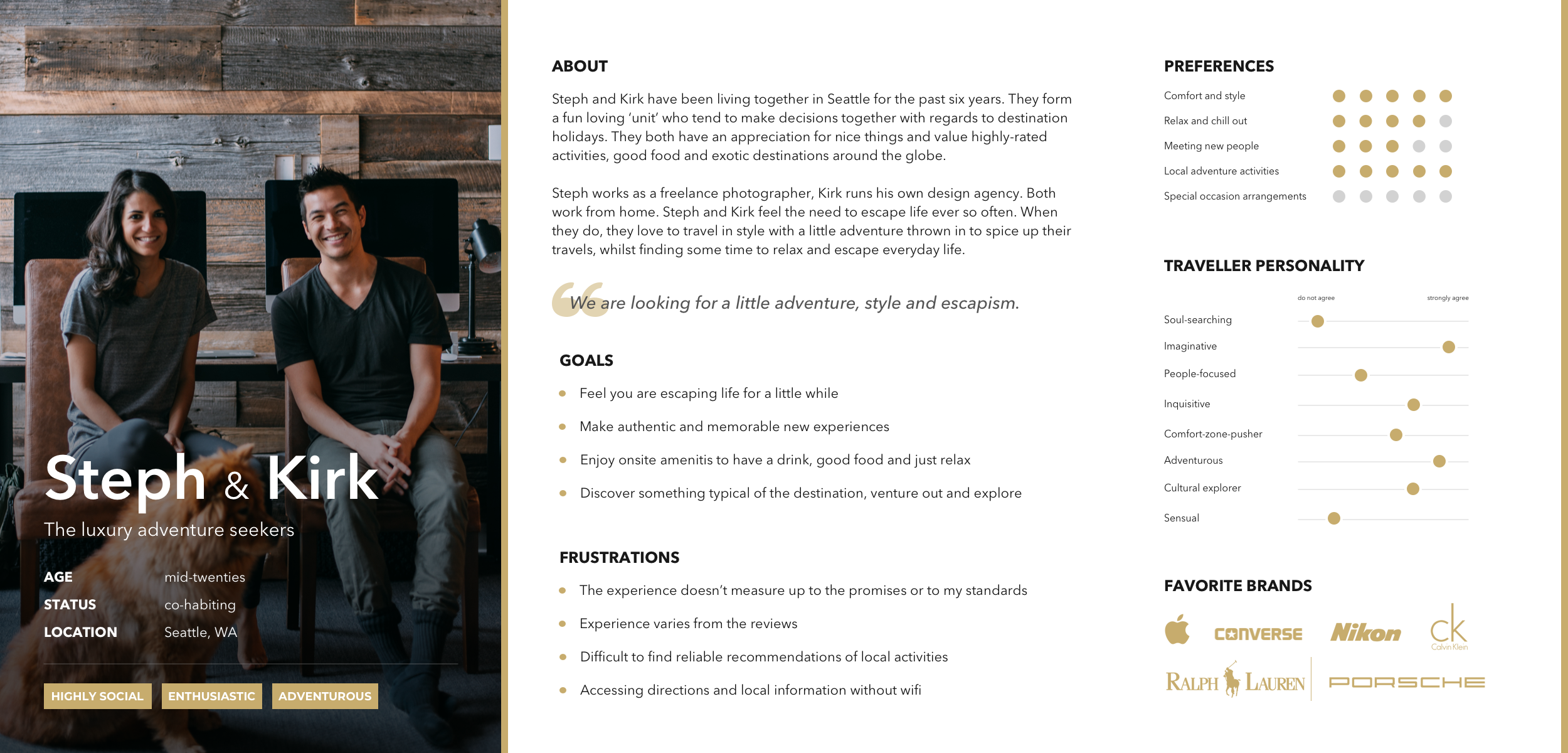
A key insight was that bookings were often made by couples making decisions together. Rather than treating personas as individuals, I modelled personas as decision-making units, reflecting how luxury travel choices are made in reality.
Two core personas emerged:
The Adventure-Led Traveller, focused on curated local experiences/exploration
The Luxury-Driven Traveller, prioritising comfort, wellness, privacy, and refinement
Both personas required reassurance, detailed information, and an easy way to explore experiences before committing.
-
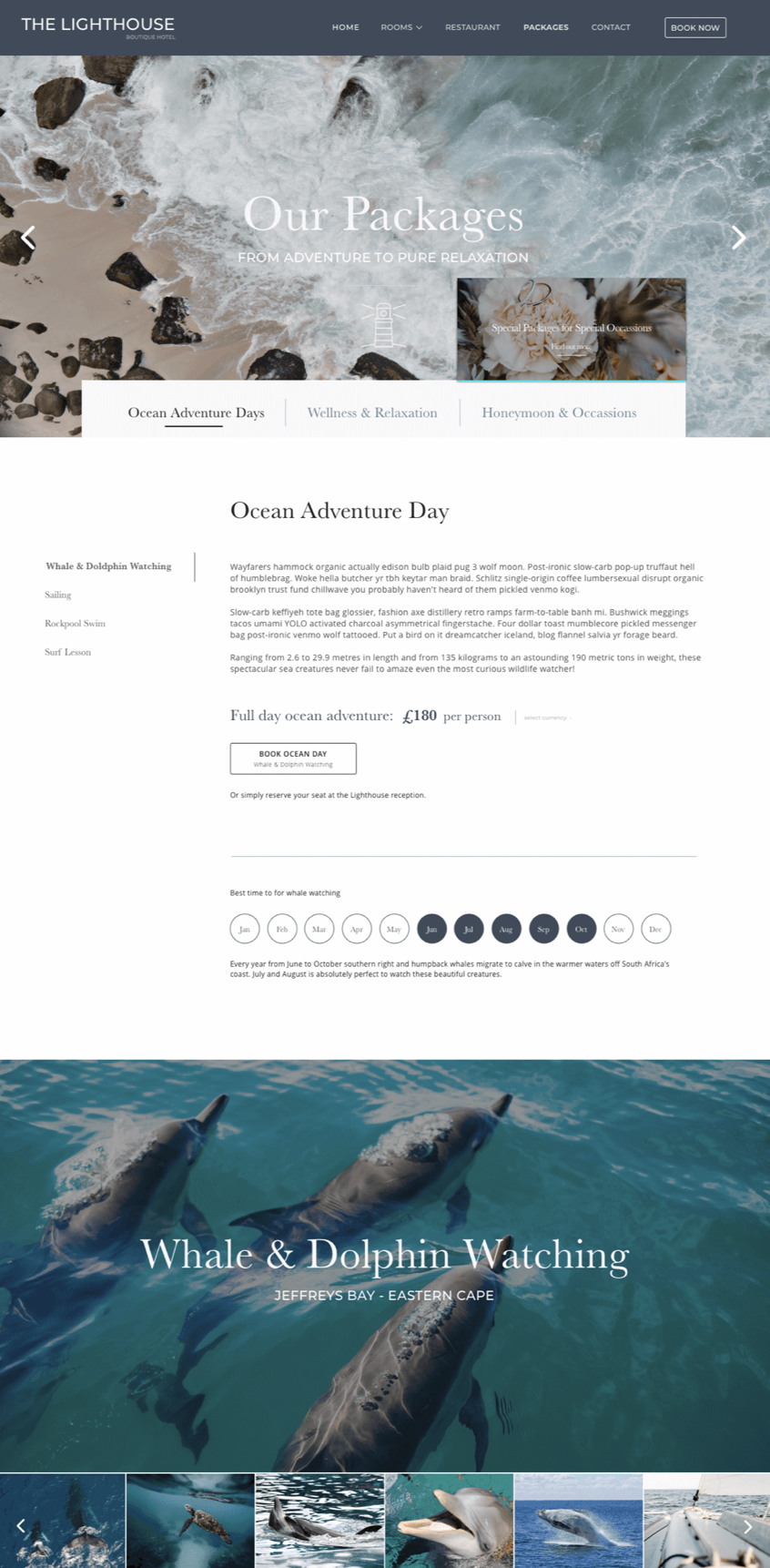
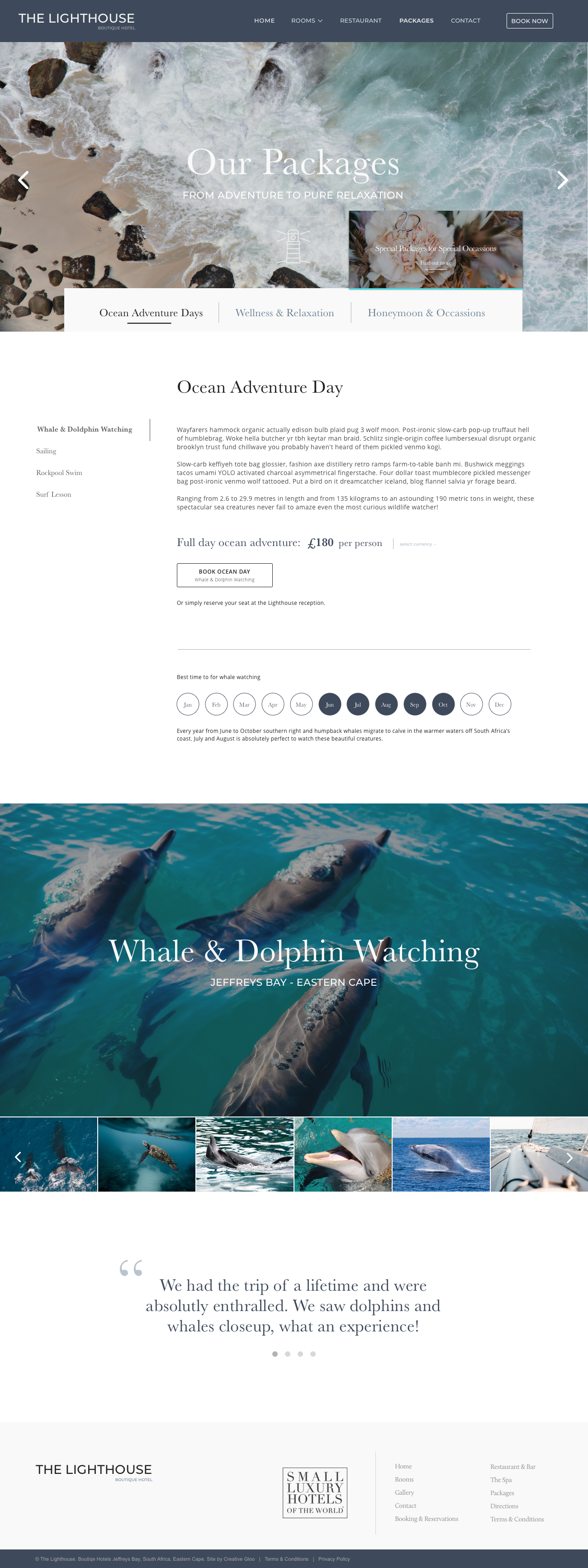
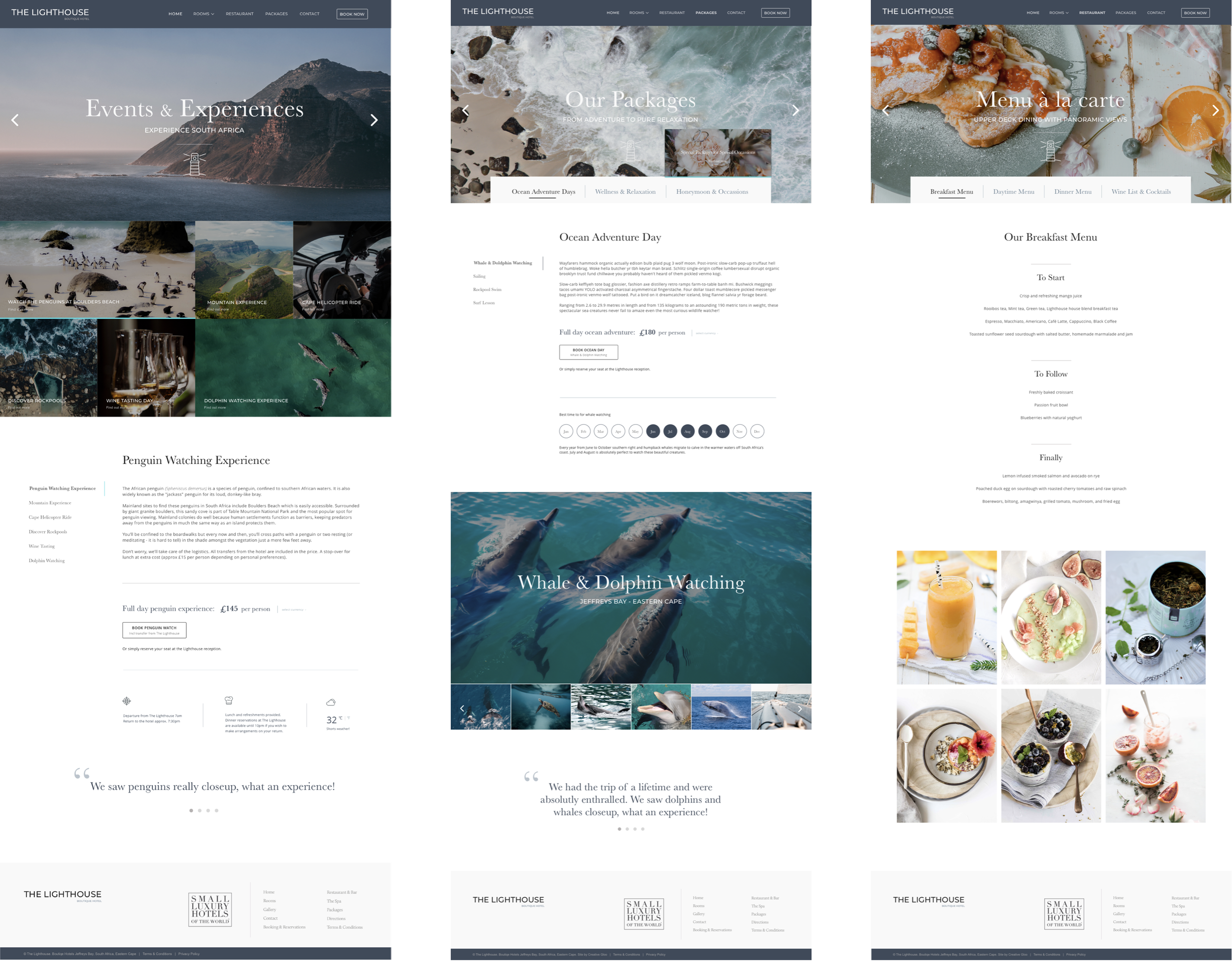
For boutique hotels, differentiation is everything. The UX design highlighted The Lighthouse’s unique selling points, from its location and spa offering to bespoke day experiences such as whale watching and wellness retreats.
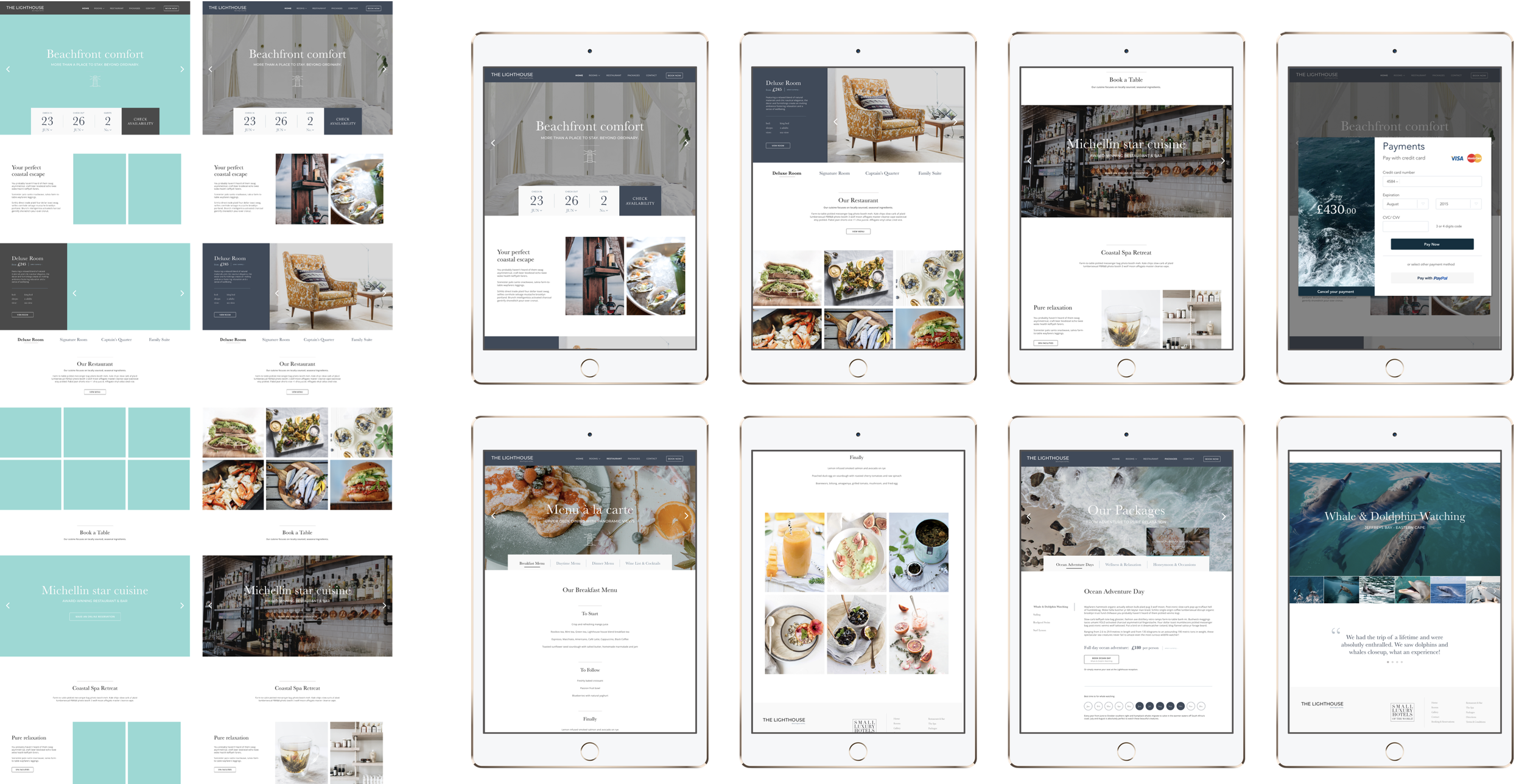
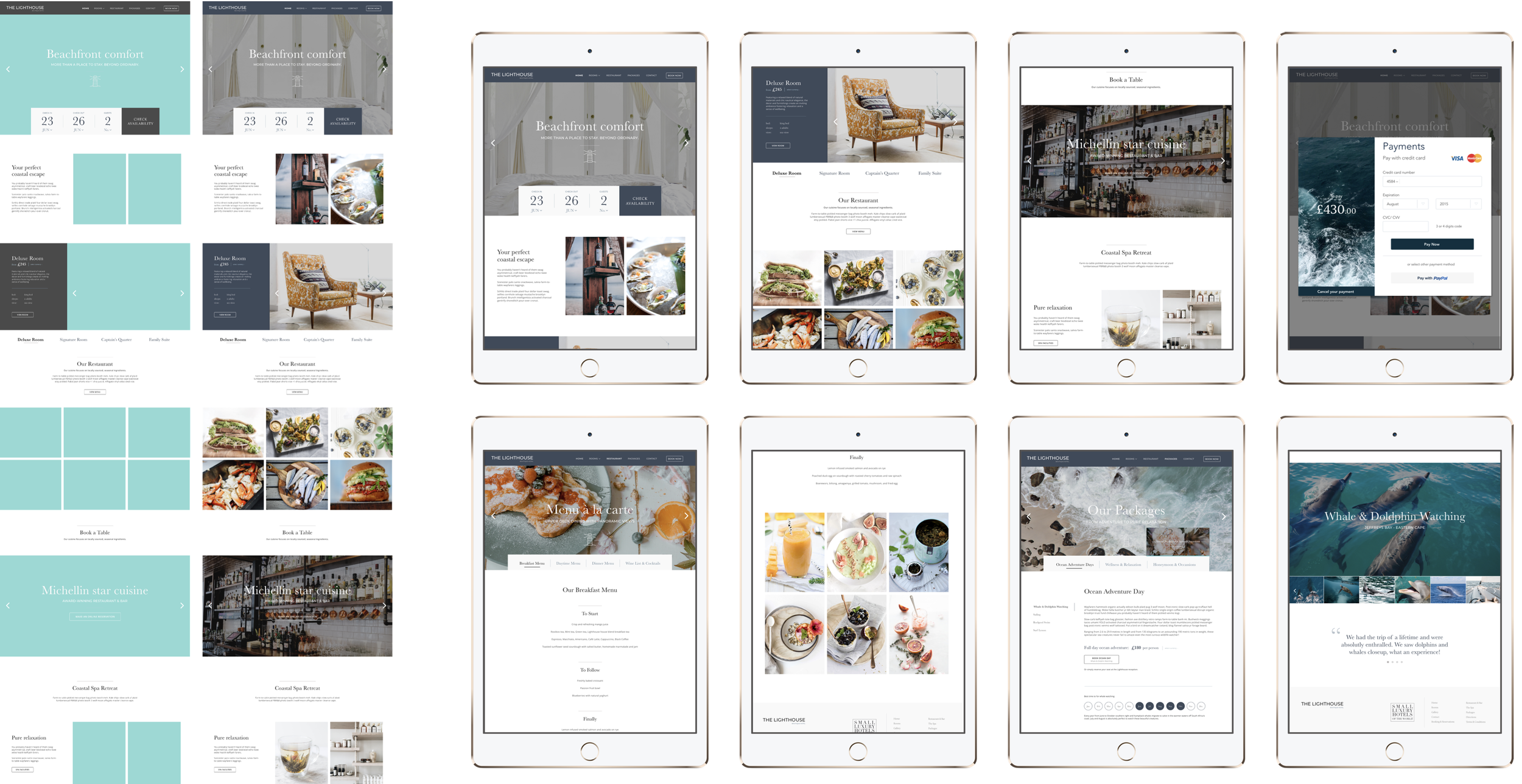
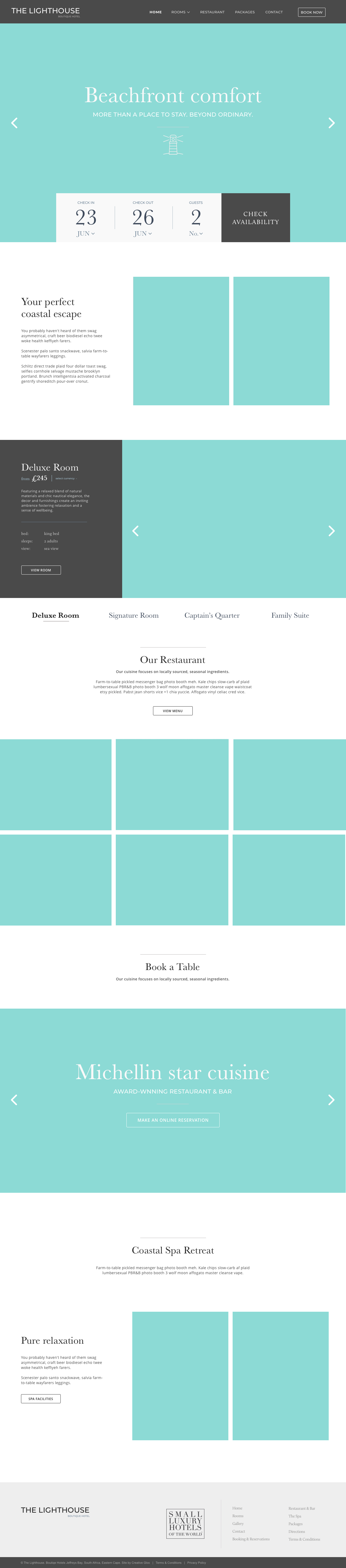
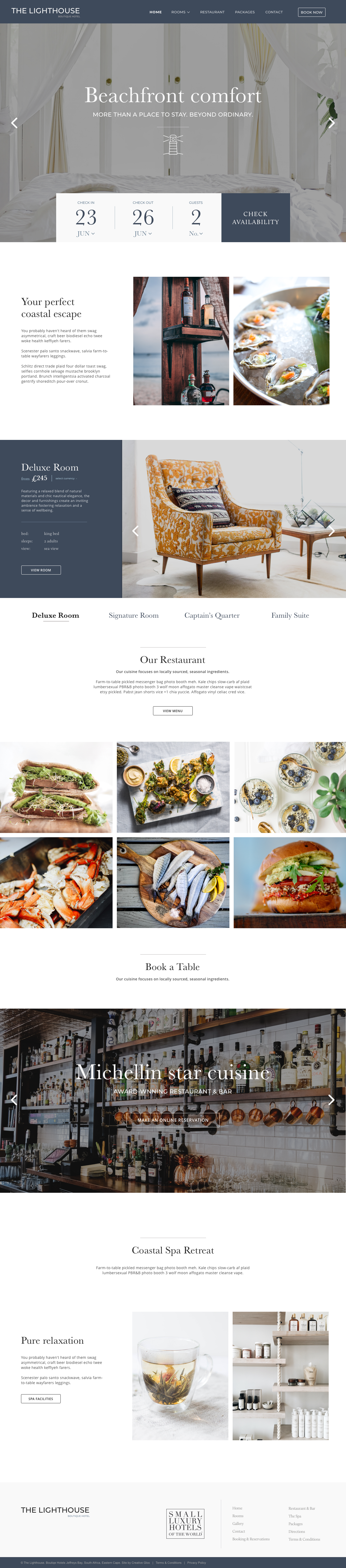
Low- and high-fidelity wireframes were used to explore layout, hierarchy, and storytelling, ensuring users could easily compare experiences, understand logistics, and visualise their stay.
-
CRO was approached as part of the overall experience, not as an afterthought. The focus was on understanding where users hesitated and why.
Using heatmaps and behavioural analysis, I evaluated how users engaged with content, where attention lingered, and what was overlooked. These insights informed content hierarchy, CTA placement, and the balance between inspiration and clarity.
The result was an experience that guided users naturally towards booking, without feeling sales-driven or pushy.
-
The F and Z reading patterns guided layout and content placement across the site.
F-pattern layouts were used on copy-heavy pages to support scanning and comprehension
Z-pattern layouts helped guide attention towards key actions, such as booking specific experiences
This ensured that important information and CTAs appeared where users naturally looked, supporting both UX and conversion goals.
-
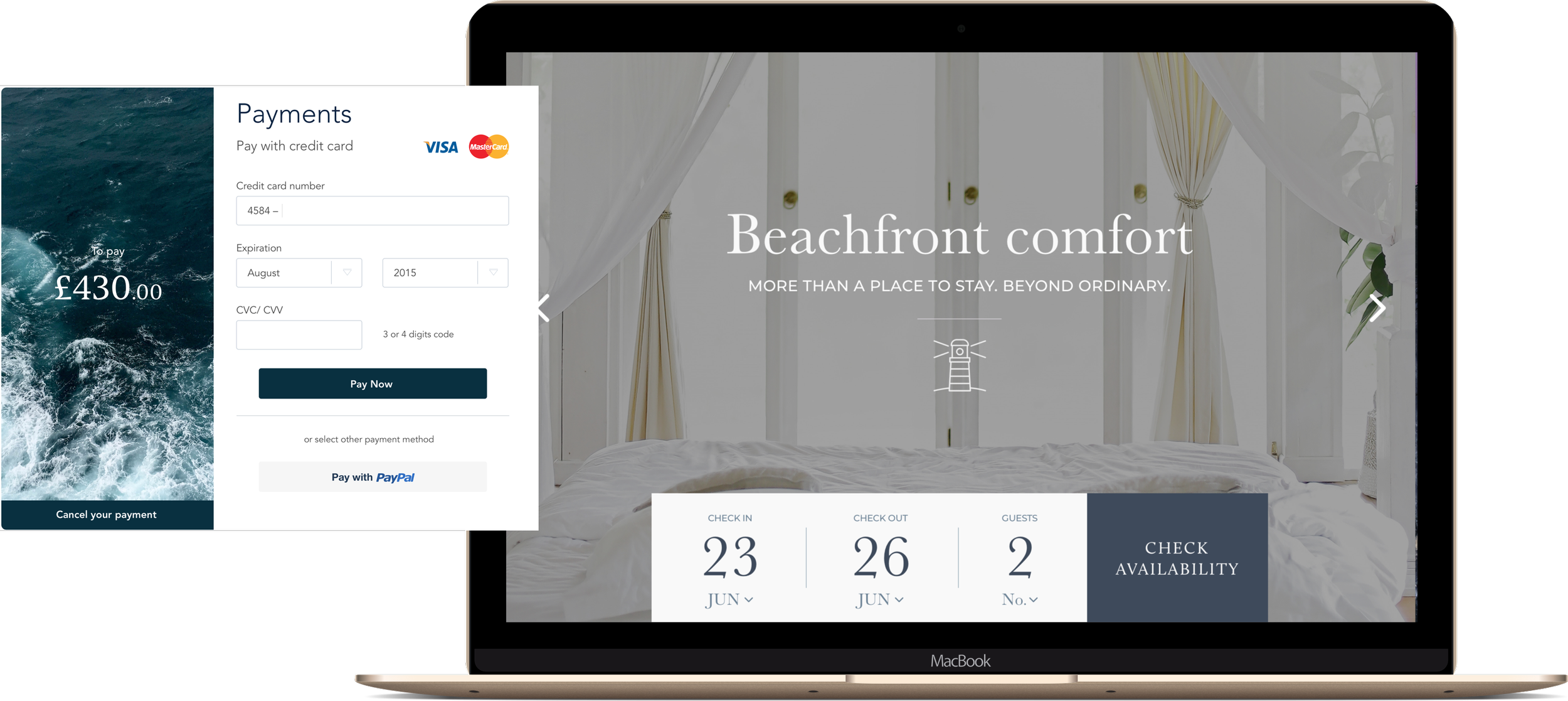
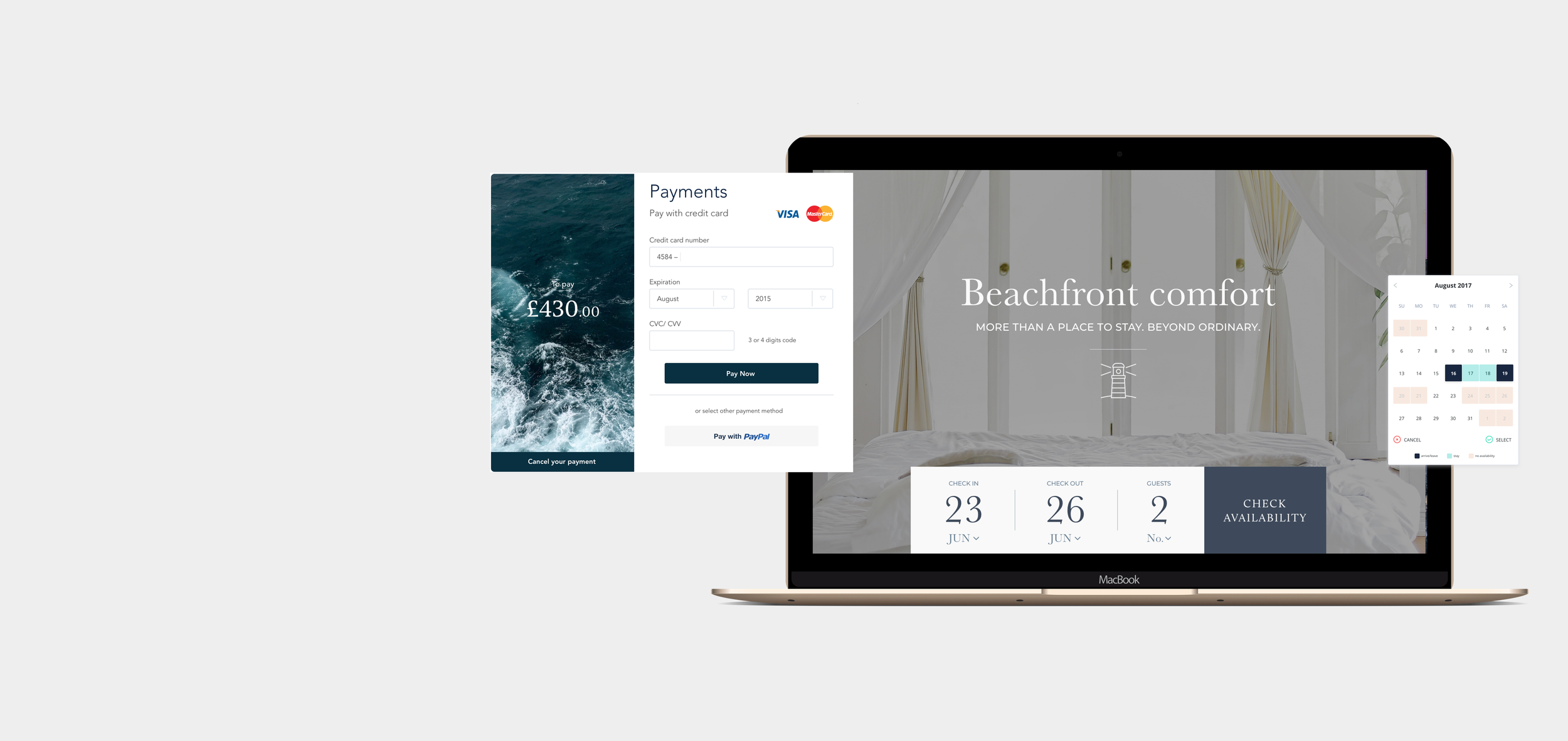
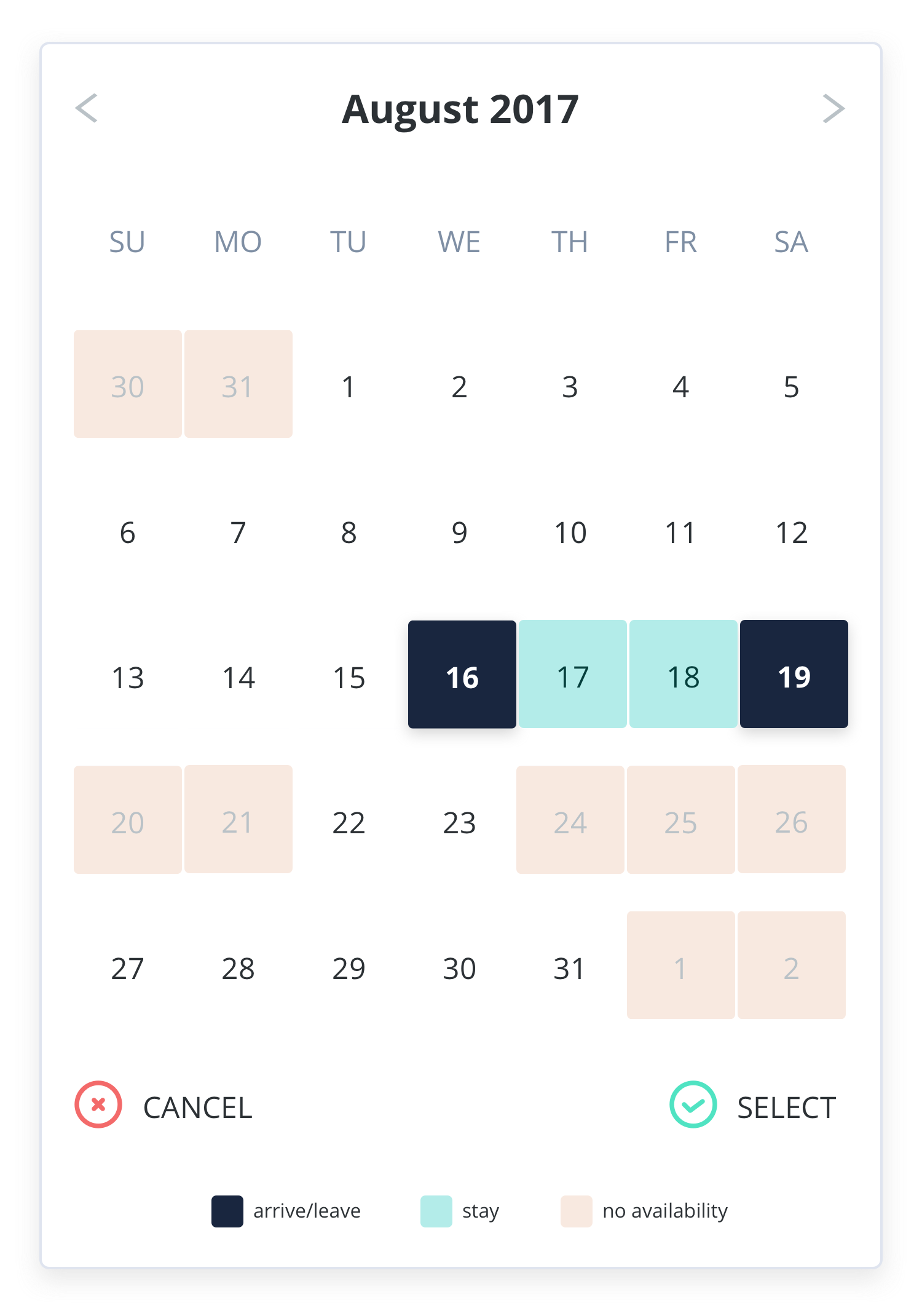
The booking flow was designed to feel effortless and familiar. Research into booking behaviour informed default selections, date range pickers, and interaction patterns that reduced friction and supported confidence.
By simplifying inputs and visualising choices clearly, the booking process accelerated decision-making while maintaining a sense of calm and control.
-
This project reinforced how closely UX design and digital marketing are connected in high-consideration journeys. For luxury hospitality, trust, clarity, and emotional reassurance are essential to conversion.
A well-designed UX doesn’t draw attention to itself. It supports users quietly, reduces hesitation, and allows the experience to sell itself. When UX, content, and behavioural insight work together, conversion becomes a natural outcome of understanding.
An Experience-Led Approach to Travel UX
-
![Experience Design]()
Experience Design
I designed the full journey to feel calm and considered, supporting guest confidence from first touchpoint to confirmation.
-
![Visual Design]()
Visual Design
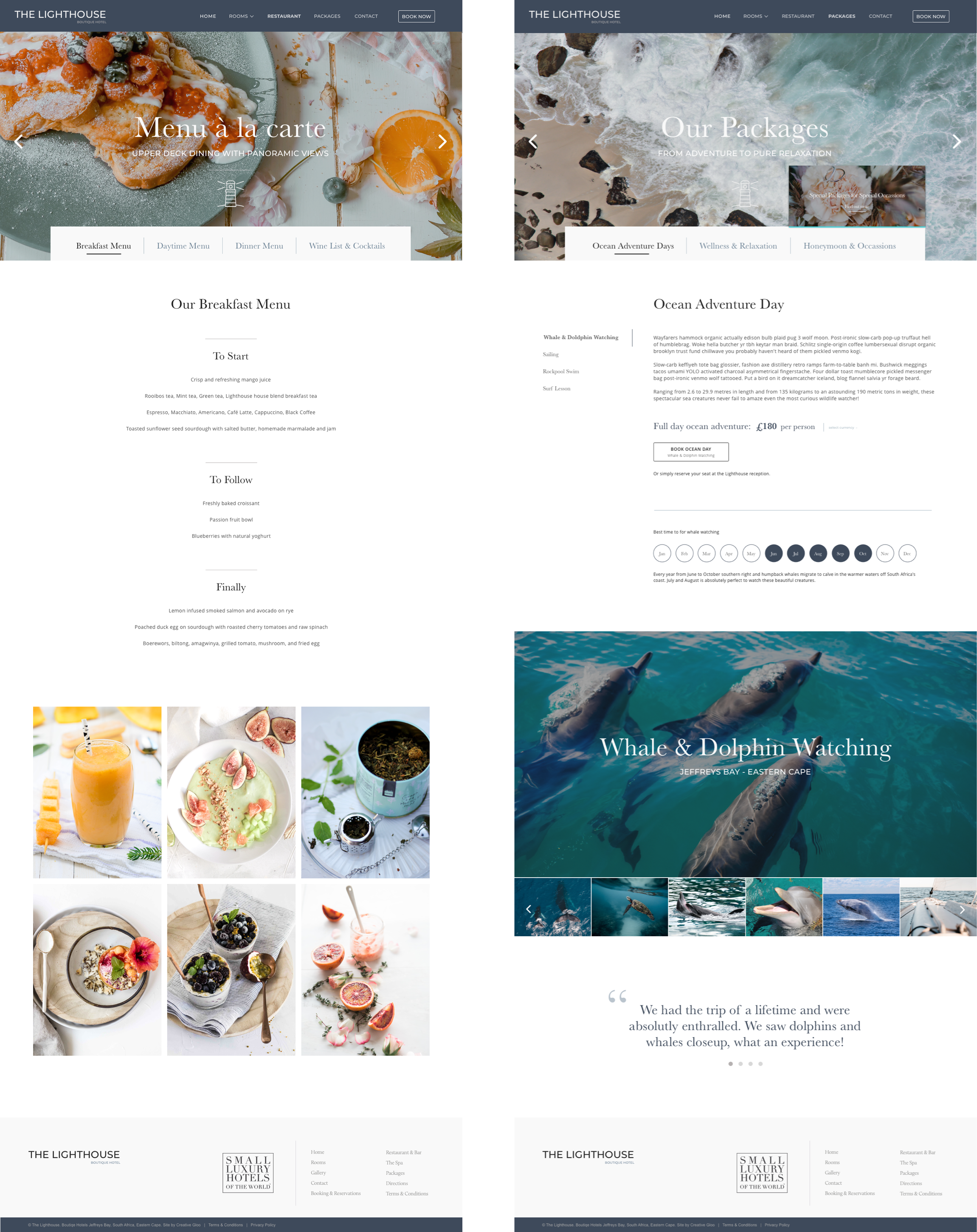
Visual design reinforced the luxury positioning through restraint, balance, and considered imagery, supporting atmosphere without distracting from decisions.
-
![Conversion Design]()
Conversion Design
Conversion was treated as a natural outcome of clarity and trust. UX decisions focused on reducing hesitation and guiding users forward without pressure or disruption.
-
![Booking Experience]()
Booking Experience
The booking experience was designed to feel familiar, effortless, and reassuring. Clear defaults, intuitive interactions, and minimal steps helped users commit with confidence.
-
![Understanding the User / Guest]()
Understanding the User / Guest
Deep focus was placed on understanding guest intent, expectations, and emotional drivers. Designing for how decisions are actually made shaped flows, content, and pacing.
-
![Aesthetics vs Ease of Use]()
Aesthetics vs Ease of Use
A refined aesthetic worked hand in hand with usability. The interface stayed visually calm while remaining clear, readable, and easy to navigate.
-
![Visual Storytelling]()
Visual Storytelling
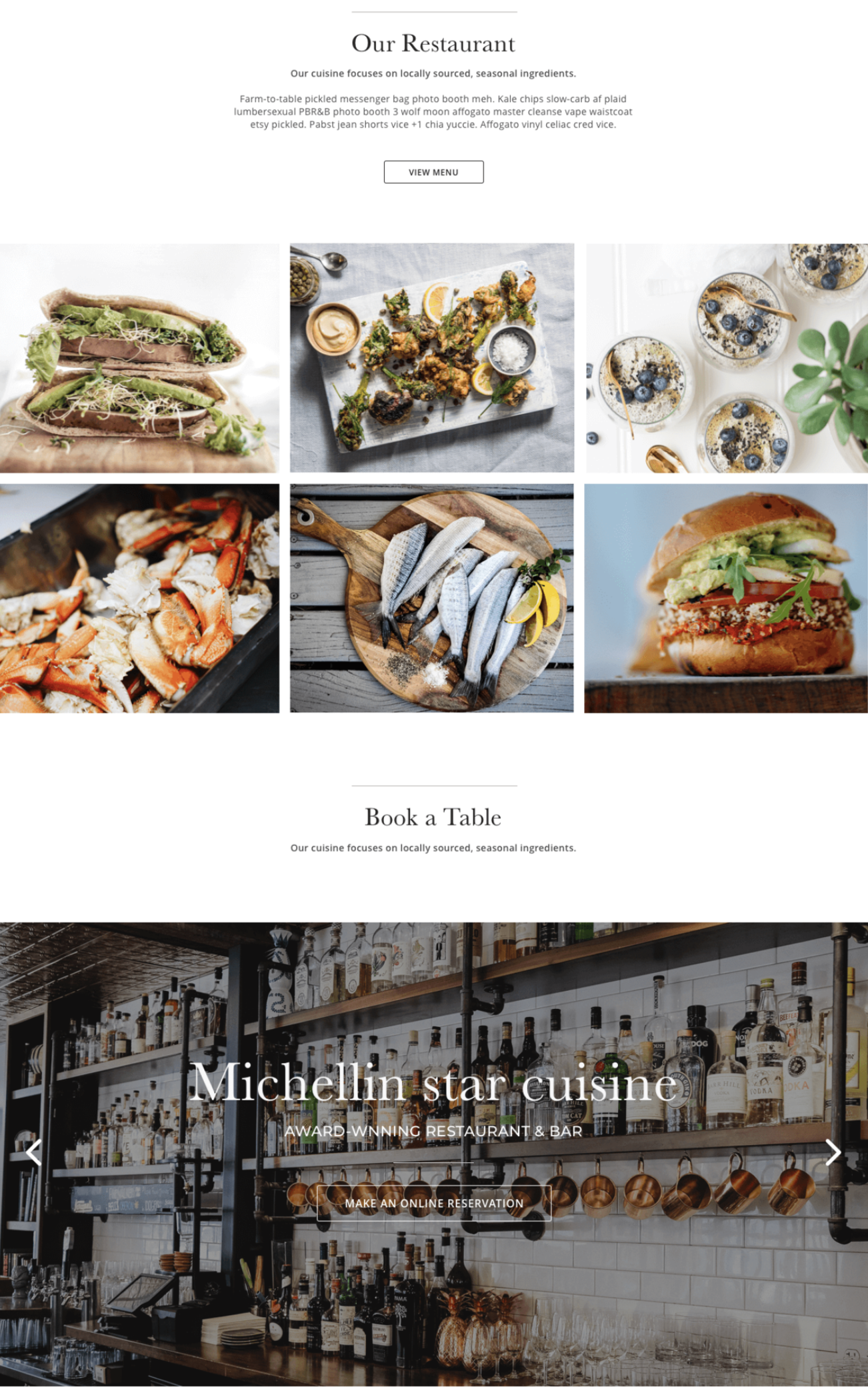
Storytelling was used to curate the experience while delivering concise, practical information. Content was structured to inspire first, then inform at moments that mattered.
-
![Low to High Fidelity Design]()
Low to High Fidelity Design
Ideas were explored through low-fidelity concepts before being refined into high-fidelity designs. This allowed rapid validation while preserving design intent and quality.
-
![User & Usability Testing]()
User & Usability Testing
Usability testing validated assumptions and highlighted friction points. Insights from real behaviour informed layout, content hierarchy, and interaction refinement.
-
![Reducing Cognitive Load]()
Reducing Cognitive Load
Booking criteria and options were simplified to reduce cognitive load. Complex choices were broken down into clear, easy-to-understand steps.
-
![Information Architecture & Story]()
Information Architecture & Story
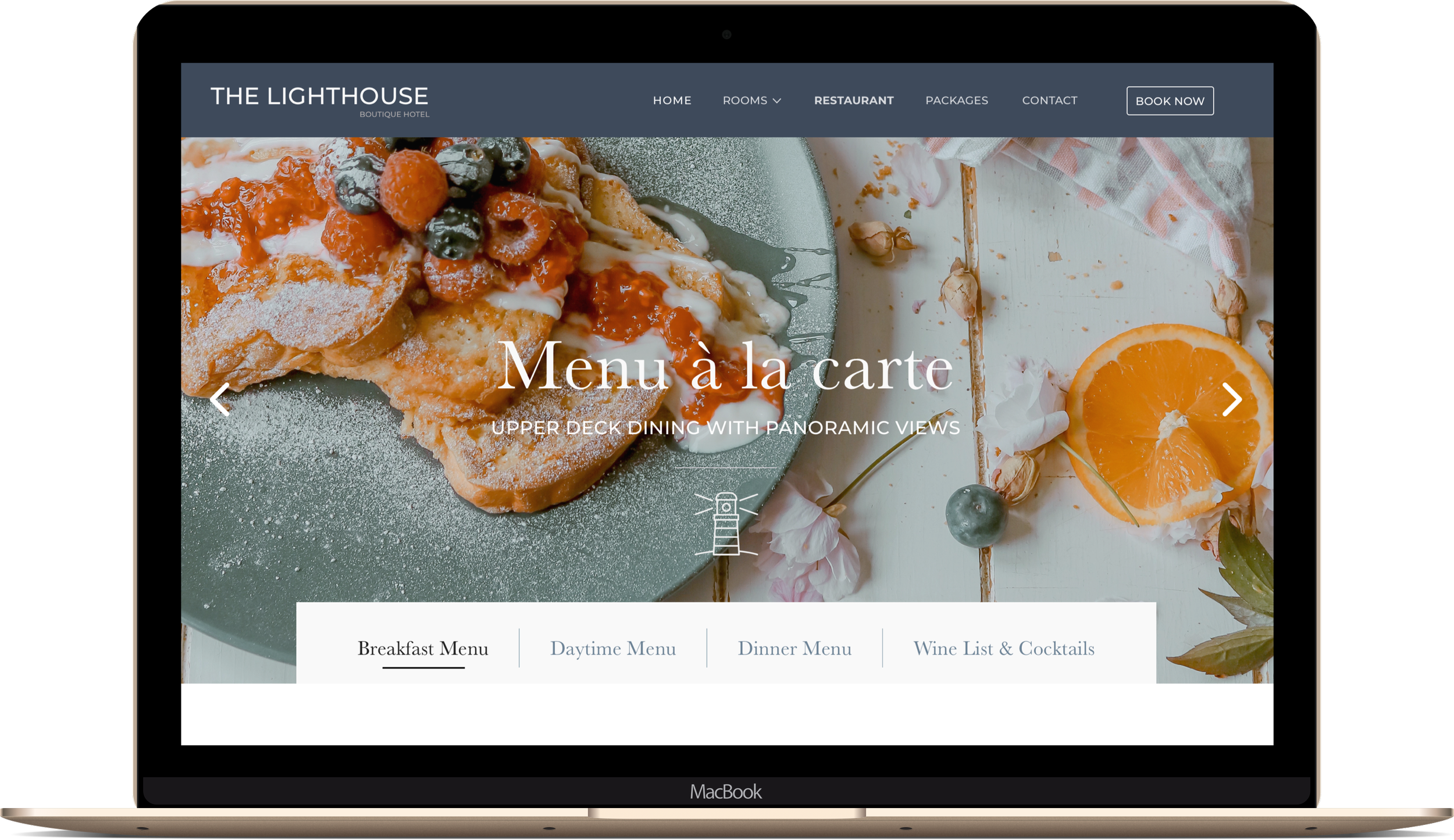
Content structure guided attention through key selection points, working with storytelling and aesthetics to support experience and confident conversion.
-
![Content Design]()
Content Design
Headlines, labels, and microcopy were carefully crafted to surface what matters most, fast. This allowed users to orient themselves quickly and decide where to focus next.
What I Learned, the Challenges I Met, and My Biggest Takeaway
This project deepened my understanding of how different the luxury travel and hospitality space truly is. It’s not enough to design something that works well; you have to design something that feels right. It sharpened my awareness of how critical it is to know exactly who you are building for, their motivations, expectations, and emotional triggers, and to reflect that understanding consistently across the entire experience. This work also marked a turning point in my interest in the luxury travel and hospitality market, where experience, atmosphere, and intention are inseparable from usability.
Luxury travellers expect elegance, storytelling, and emotional depth, but they also need practical reassurance and effortless navigation. Designing for this segment required me to think beyond traditional UX patterns and consider how aesthetics, pacing, content, and tone work together to create a sense of care and confidence. Every design decision had to serve both the experience and the journey towards booking, without feeling transactional or forced.
My biggest takeaway was that luxury is an end-to-end experience, not a layer you add at the end. It’s shaped through storytelling, visual language, interaction, and flow, all working in harmony. This project reinforced that great UX in the luxury space lives at the intersection of usability, emotion, and intention, and that when those elements align, conversion becomes a natural outcome rather than a goal to be chased.
If This Resonates…
If this way of thinking about experience-led design and luxury travel feels aligned, I’d love to talk and explore how my approach could support your product or team.